

Blog
SEO et langages de programmation clés à maîtriser en 2025
Le SEO en Tunisie en 2025 dépasse la simple optimisation de mots-clés. Il s’appuie sur une création de contenus riches, organisés par des balises Hn et un maillage interne optimisé pour améliorer la navigation. La montée de la recherche vocale demande aussi d’adapter les contenus avec des questions en langage naturel, renforçant ainsi la visibilité.

Tendances SEO avancées en Tunisie
Le référencement naturel repose désormais sur des contenus longs et riches, bien structurés avec des balises Hn, et un maillage interne pertinent. La recherche vocale, en forte croissance, pousse à adapter les contenus pour répondre à des questions formulées naturellement. Le référencement local reste fortement privilégié.
Langages de programmation front-end
JavaScript est le langage incontournable, notamment avec les frameworks React et Vue.js, qui permettent la création de sites dynamiques et interactifs adaptés aux besoins des utilisateurs.
Langages de programmation back-end et intelligence artificielle
Python est de plus en plus utilisé pour le développement back-end et pour intégrer des solutions d’intelligence artificielle dans les projets digitaux.
Langages classiques et design responsive
PHP reste largement utilisé, notamment pour gérer des CMS comme WordPress. Quant à HTML5 et CSS3, ils sont indispensables pour concevoir des sites web responsives, adaptés à la navigation mobile, qui représente la majeure partie du trafic en Tunisie.
Questions fréquentes
Les réponses aux questions que l’on nous pose le plus souvent.
Les développeurs doivent privilégier la vitesse de chargement, la compatibilité mobile, la sécurité HTTPS, les données structurées et un code propre pour faciliter l’indexation et offrir une bonne expérience utilisateur.
Une collaboration étroite est essentielle pour optimiser la structure du site, les URL, les métadonnées et la présentation du contenu afin d’aligner la technique avec les meilleures pratiques SEO.
JavaScript (notamment avec React ou Vue.js) pour les interfaces interactives, Python pour le back-end et les applications d’intelligence artificielle, et PHP pour la personnalisation des CMS comme WordPress.
Le design responsive garantit une expérience utilisateur optimale sur tous les appareils, ce qui est un critère important pour le classement des sites par Google, surtout avec la dominance du mobile.
L’IA permet d’automatiser la création de contenu, la personnalisation et l’analyse du comportement utilisateur, optimisant ainsi la stratégie SEO de manière plus efficace.
À lire aussi
 Top 10 des Langages de Programmation pour les Systèmes Embarqués en 2025
Top 10 des Langages de Programmation pour les Systèmes Embarqués en 2025 En 2025, les systèmes embarqués jouent un rôle clé dans des secteurs comme…
Lire l’article Du SEO au GEO : optimiser son site pour l’IA en 2027
Du SEO au GEO : comment optimiser son site pour les moteurs de recherche IA en 2027 ? Le SEO évolue avec l’arrivée des moteurs de recherche IA.…
Lire l’article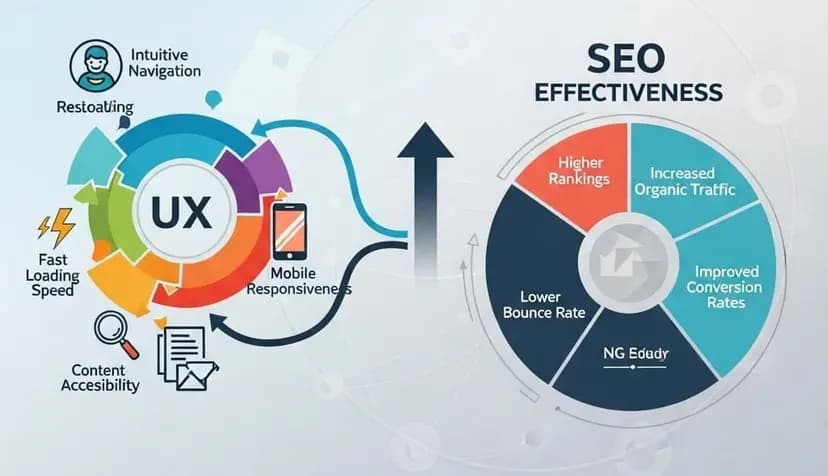 UX + SEO : le duo gagnant pour un site web performant
UX + SEO : le duo gagnant pour un site web performant Aujourd’hui, un simple site web ne suffit plus pour se démarquer.Les entreprises qui réussissent…
Lire l’article
Un projet en tête ?
Parlons-en : devis gratuit et sans engagement sous 24 h.